Automatiseer incasso's met AI-gestuurde spraak, sms en e-mail. Incasseer meer, behoud relaties en volg resultaten in realtime.

Automated payment reminders are scheduled messages sent to customers before or after an invoice due date without requiring manual intervention.
Using an automated payment reminder system, businesses can create reminder sequences based on predefined rules. The software monitors invoice status and automatically sends reminders at selected stages of the payment cycle.
For example, reminders can be scheduled a few days before the due date, on the due date itself, or after an invoice becomes overdue.
This consistent approach helps businesses maintain regular customer communication while reducing the workload for finance teams.
A manual follow up is a payment reminder that is personally handled by a member of the finance or accounts receivable team.
This may include sending individual emails, making a phone call, reviewing payment history, or discussing payment arrangements directly with the customer.
Manual follow ups often require staff to monitor invoice ages, track payment status, and determine the most appropriate next step for each unpaid invoice.
Although this process requires more time, it provides flexibility when handling unique customer situations.
Automated payment reminder software follows predefined rules that determine when reminders should be sent.
Businesses typically configure a reminder schedule based on their payment terms and internal collections process.
For example, reminders may be sent:
Each reminder can include important information such as the invoice number, payment amount, payment link, due date reminder, and payment confirmation instructions.
Because the system handles routine communication automatically, businesses can maintain consistency across every customer account.
Manual collections rely on human decision making throughout the follow up process.
Finance teams review outstanding invoices, evaluate customer responses, and decide how to communicate with each customer.
In some situations, the next step may involve sending another email.
In other cases, a phone call or personal conversation may be more appropriate.
Manual follow ups allow staff to adjust their communication style based on previous interactions, customer history, or ongoing discussions.
This flexibility can be particularly valuable when dealing with sensitive accounts or disputed invoices.
Automation offers several advantages for businesses that manage a growing number of invoices.
One of the biggest benefits is consistency.
Every customer receives reminders according to the same reminder schedule, regardless of staff availability or workload.
This reduces the risk of forgotten reminders while helping businesses maintain professional customer communication.
Automation also reduces repetitive manual effort, allowing finance teams to spend more time on higher value activities.
By sending timely reminders before and after payment deadlines, businesses can encourage invoices to be paid faster while improving overall cash flow management.
Although automation offers significant efficiencies, manual follow ups continue to play an important role within many collections strategies.
Some customer situations require personal attention that automated systems cannot provide.
For example, a customer may question an invoice, request additional documentation, or discuss an alternative payment arrangement.
These conversations often benefit from direct communication rather than automated reminder sequences.
Manual follow ups also help strengthen client relationships by demonstrating that businesses are willing to listen, understand individual circumstances, and work toward practical solutions.
Both approaches aim to achieve the same outcome, which is timely payment.
The difference lies in how the communication is managed.
Automated payment reminders focus on consistency, efficiency, and scalability.
Manual follow ups focus on flexibility, relationship management, and personalized communication.
Neither approach is universally better than the other.
Instead, each serves a different purpose within the overall collections process.
Businesses that understand these differences are better positioned to create a balanced strategy that supports both operational efficiency and positive customer relationships.
Managing payment reminders manually becomes increasingly difficult as invoice volumes grow.
Finance teams may spend considerable time checking payment status, updating spreadsheets, reviewing customer records, and preparing reminder emails.
Automated reminder systems simplify much of this work by monitoring invoices and sending reminders according to predefined rules.
As a result, teams can reduce manual tracking while focusing their attention on customers who genuinely require personal assistance.
This improves productivity without reducing the quality of customer service.
Cash flow depends on invoices being paid according to agreed payment terms.
When payments are delayed, businesses may experience unnecessary pressure on working capital.
Automated payment reminders help encourage customers to pay on time by maintaining regular communication throughout the payment cycle.
Consistent reminders reduce the likelihood that invoices will be forgotten, helping businesses improve payment timing and maintain healthier cash flow.
For organizations managing hundreds or thousands of invoices each month, even small improvements in payment behavior can make day-to-day financial planning more predictable.
Customers generally appreciate clear and timely communication.
Receiving a friendly reminder before an invoice becomes overdue helps customers manage their own payment schedules while reducing the chance of accidental late payments.
Automated payment reminders can also include helpful information such as invoice details, payment links, payment confirmation instructions, and contact information if assistance is needed.
Providing this information upfront makes it easier for customers to complete payments without unnecessary delays.
When businesses combine automation with thoughtful customer communication, they create a more professional and customer focused payment experience.
One challenge with manual collections is maintaining consistency.
As workloads increase, reminder timing may vary between customers or individual team members.
Some reminders may be delayed, while others may unintentionally be overlooked.
Automation helps standardize the entire process by ensuring reminders are sent according to the same predefined schedule every time.
This consistency supports stronger internal processes while providing customers with a predictable communication experience.
Automated payment reminders are particularly effective for routine payment communications that follow a predictable process.
For example, reminders can be scheduled before an invoice due date, on the due date, and after the payment becomes overdue. Because the system follows predefined rules, every customer receives consistent communication without requiring manual effort from the finance team.
Automation is especially valuable for businesses managing large customer bases where sending individual payment reminders would be time consuming. As invoice volumes increase, automated reminder systems help maintain consistent follow ups while reducing the administrative workload.
Although automation is highly effective for routine collections, there are situations where human intervention remains the better option.
Disputed invoices often require conversations that go beyond a standard payment reminder. Customers may have questions about invoice details, payment amounts, delivered services, or contract terms. A personal discussion allows finance teams to understand the issue and work toward dispute resolution more effectively.
Manual follow ups can also be beneficial for sensitive accounts, long-term clients, or high-value business to business transactions where maintaining strong client relationships is a priority.
In these situations, personalized communication demonstrates flexibility and helps build trust.
Many businesses find that the most effective collections strategy combines automated payment reminders with manual follow ups.
Automation handles repetitive tasks such as sending due date reminders, payment confirmations, and follow up messages according to a predefined reminder schedule.
Finance teams can then focus their time on customers who require personal attention, including disputed invoices, complex payment discussions, or accounts showing ongoing payment delays.
This balanced approach improves efficiency without removing the human element from customer communication.
One objective shared by most finance teams is reducing Days Sales Outstanding (DSO).
When invoices remain unpaid for extended periods, businesses may experience slower cash flow and reduced working capital.
Timely payment reminders help keep invoices visible throughout the payment cycle, encouraging customers to review and complete outstanding payments before balances continue to age.
Combined with appropriate manual follow ups where necessary, automation supports a more proactive collections process that helps businesses improve payment timing.
Healthy working capital allows businesses to invest in growth, meet operational expenses, and respond to changing market conditions.
Late payments can place unnecessary pressure on available cash, particularly for organizations managing high invoice volumes.
Automated payment reminders support cash flow management by encouraging customers to pay according to agreed payment terms. As more invoices are paid on time, businesses gain greater confidence in their financial planning while reducing the need for reactive collections activities.
Many organizations already use accounting software and financial platforms to manage invoicing and receivables.
Modern payment reminder software is often designed to work alongside these existing systems, helping businesses automate payment reminders without significantly changing established workflows.
Depending on the solution, businesses may also benefit from custom integrations that synchronize invoice information, payment status, and customer records across multiple platforms.
This reduces duplicate data entry while helping maintain accurate financial information.
Successful collections rely on clear and professional communication.
Automated reminder software helps businesses deliver consistent messages across multiple communication channels while ensuring customers receive relevant information at the right time.
Each payment reminder may include:
Providing complete information within each reminder makes it easier for customers to understand what action is required.
Not every customer responds in the same way.
Some customers pay immediately after receiving a reminder.
Others may require additional follow ups, clarification, or support before completing payment.
Automation manages routine reminder sequences efficiently, while manual follow ups allow finance teams to respond appropriately when customer responses require additional attention.
This flexibility helps businesses maintain positive customer relationships while addressing individual situations more effectively.

Geautomatiseerde spraak-, sms- en e-mailstromen verkorten de DSO en verbeteren de cashflow—met behoud van klantrelaties.
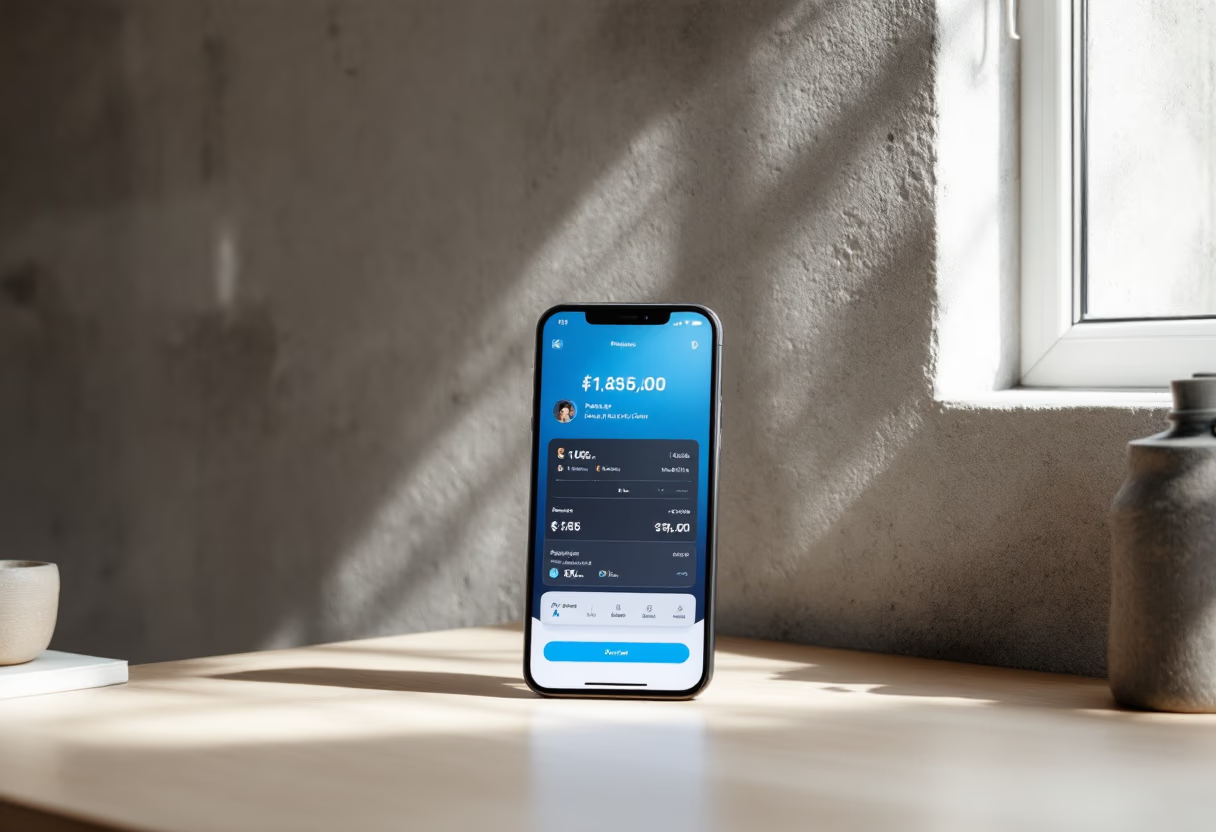
![[interface] afbeelding van een mobiel apparaat waarop een website laadt (voor een AI legal tech bedrijf)](https://cdn.prod.website-files.com/69cac50e52dc293a842d68a8/69cac6d63ed94d150b5c5f6f_69e1f733-2392-4162-8d44-101d8bb62eed.avif)
Omnichannel-automatisering verhoogt de betalingspercentages en vermindert klantverloop—geen handmatige herinneringen nodig.

Businesses choose Collectmaxx when they want to reduce manual collection work, improve cash flow and create a more modern payment reminder process.
The platform helps teams automate routine reminders, communicate through preferred channels and give customers simple ways to pay.
For organizations that want better recovery without aggressive collection experiences, Collectmaxx offers a practical and scalable approach.
Trusted by industry leaders
Discover how enterprises accelerate cash flow and reduce DSO with automated, AI-powered payment recovery.
Overdue invoices fell by 40% in one quarter. Automated voice outreach made collections effortless.

AI automation cut manual tasks and improved customer satisfaction across our portfolio.

Late payments are resolved faster, with less friction for both clients and staff.

Automated reminders and paylinks streamlined collections and boosted cash flow.

Seamless integration and real-time dashboards give us total receivables control.

Structured, respectful communication makes payment recovery smarter and more effective.

Have more questions? Our experts can help.
Automated outreach for every overdue invoice.
AI-powered calls, SMS, and email flows.
Live dashboards. Effortless integration.